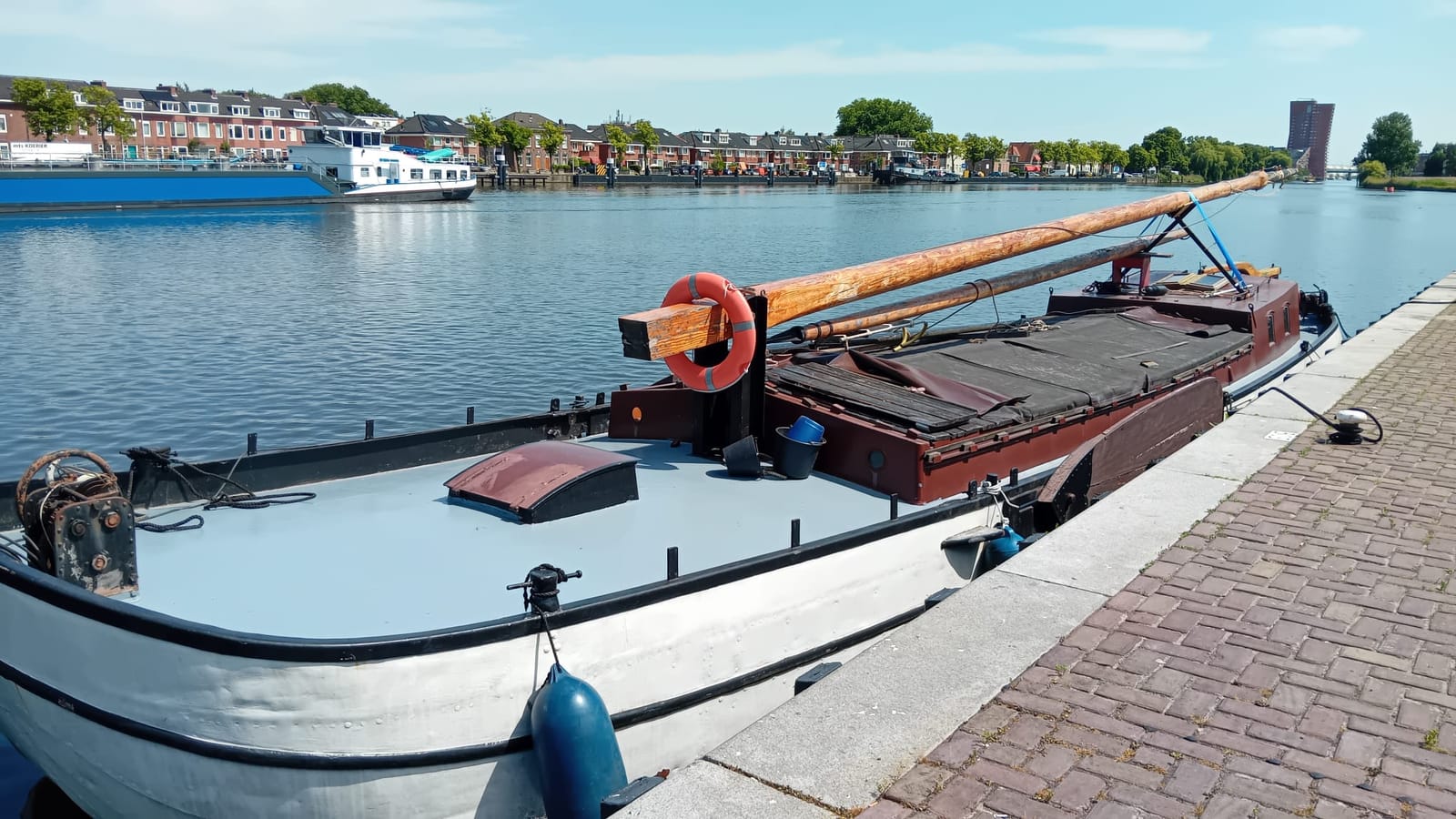
The “Verbetering”
Every trip we run happens aboard this one ship: the “Verbetering”, an original Hasselter cargo aak launched in 1916 and one of only seven aken the famous Barkmeijer yard ever built. She is an exceptionally rare sailing monument - and she still works for a living. This page is her story: what an aak actually is, what she's like aboard, and how she went from hauling freight through the Frisian shallows to carrying you down her old routes.
- Built 1916Barkmeijer yard, Stroobos - hull number G5293N
- 1 of only 7aken ever built by Barkmeijer
- 16 metresiron hull, flat bottom, no keel
- 50 cm draughtshe floats where other boats run aground
What is a Hasselter aak?
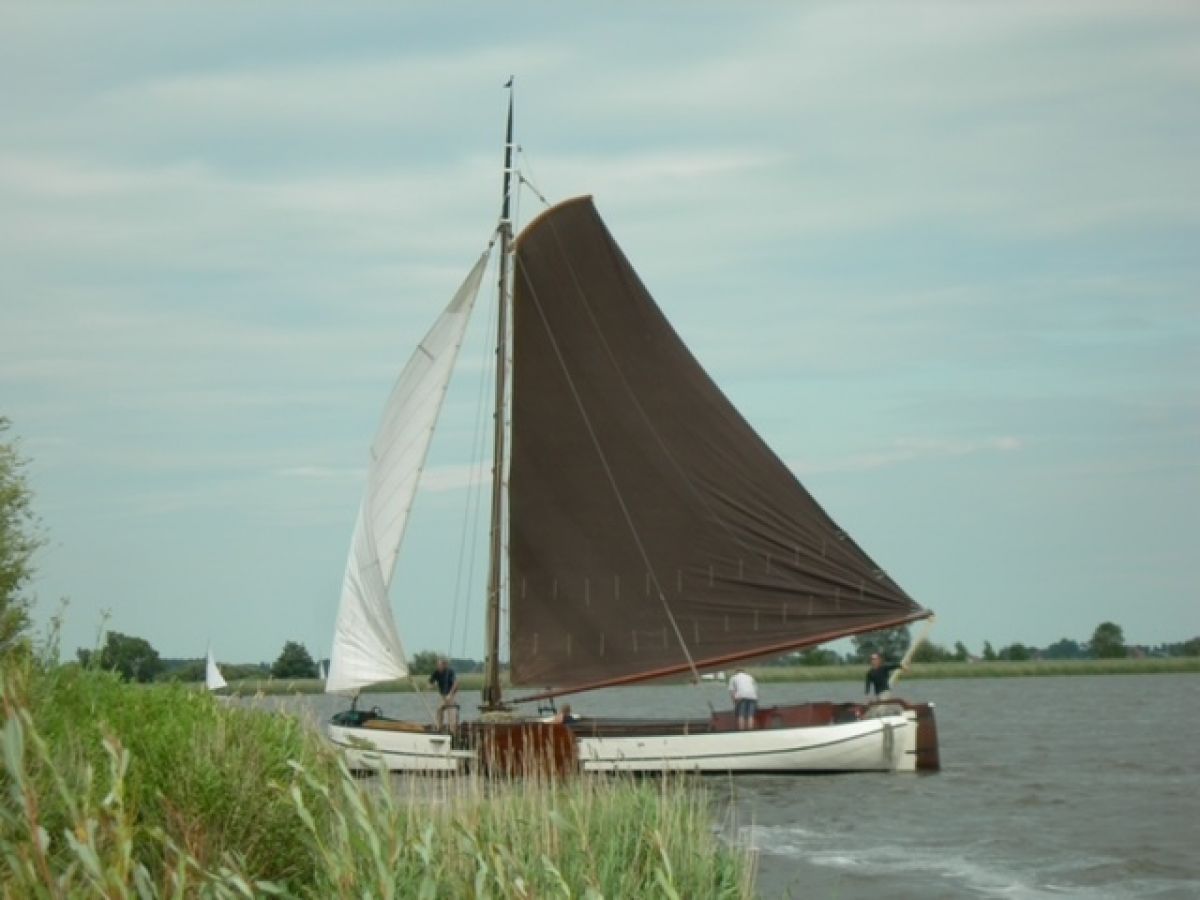
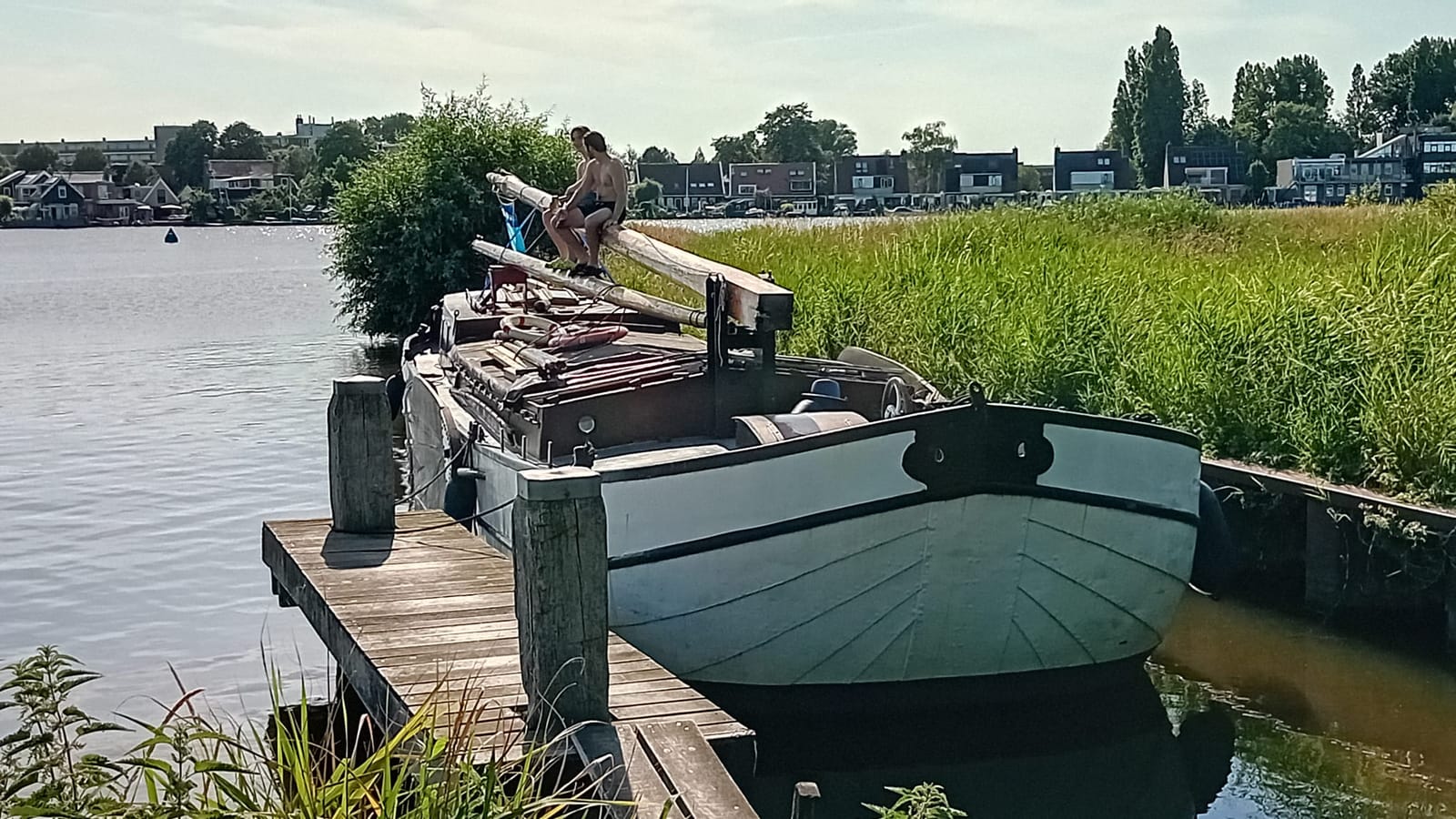
An aak is the ultimate Dutch flat-bottomed ship: a robust vessel with no deep keel, carrying the characteristic leeboards - zijzwaarden - on her hull instead. The design was invented for one job: moving heavy freight through the shallow waters of Friesland. A century later, that same clever shape is exactly what makes her such a good ship to be a guest on.
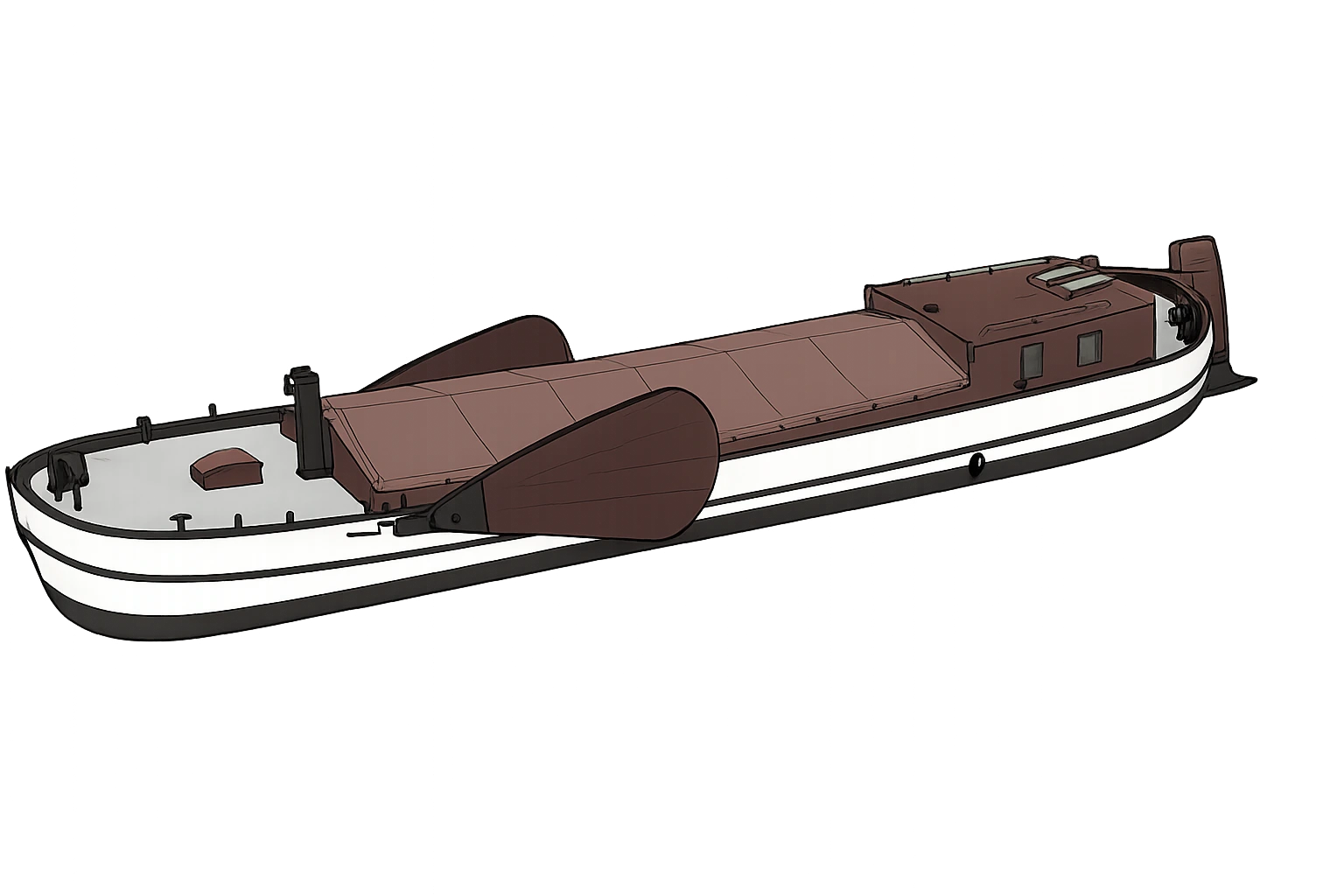
- 50 centimetres of draught
- She needs barely half a metre of water, so she reaches hidden places where other boats run aground - quiet creeks, shallow polder water, moorings nobody else can take.
- She can dry out upright
- On the Wadden, an aak simply sits down flat on the sand as the tide leaves - no lean, no drama - and floats off again with the flood. Very few ships can do that on purpose.
- A wide, steady hull
- The beam that once took heavy cargo now means a remarkably stable ship. She barely rolls - which is most of the answer to "will I get seasick?"
- Room you don't expect
- That same width gives her far more living space aboard than you'd guess from the quay - a full galley with a lounge, a cabin at each end, and deck seating for twelve.
Aboard: modern comfort in a historic shell
She was built to carry bricks; she has been refitted to carry people well. There's a compact galley with a fridge to keep your drinks cold, and a toilet aboard for the necessary comfort. In the summer months the ship transforms completely: the roof opens right up, and you sail in the sun and the open air.
The best seats in the house are right at the front, on the bow - first row, with nothing between you and the water. Below deck you'll find the vooronder (bow cabin), the galley with its lounge - sofa and table - the main kajuit, and the engine room.
A sailing monument
The “Verbetering” is an exceptionally rare sailing monument from 1916 - one of only seven Barkmeijer aken ever built, and still on the water. Her hundred and ten years, chapter by chapter.
A rare Barkmeijer
Stroobos, FrieslandThe “Verbetering” - hull number G5293N - was launched in 1916 at the renowned Barkmeijer yard in Stroobos, built as the lengthened sister ship of the ‘Twee Gezusters’ of 1913. That makes her historically precious: she is one of only seven aak ships Barkmeijer ever built at Dokkum and Stroobos.
Frisian maritime design
This authentic roefschip is a light, Frisian take on the better-known Hasselter aak: iron hull, flat bottom, and just 50 cm of draught - made for the shallow Frisian waters. What sets her design apart is what's missing: instead of a heavy welling plate, her rubbing strake is a subtle, elegant flat half-round. A detail a shipwright spots from across the harbour.
In service of the brick works
GerkeskloosterAfter her first years as a freight carrier she was re-measured in 1939 and registered to skipper F. de Bruin of Augustinusga. For years the “Verbetering” served as the loyal workhorse of the brick works at Gerkesklooster, hauling heavy cargo alongside one other small aak.
Restoration, and a new course
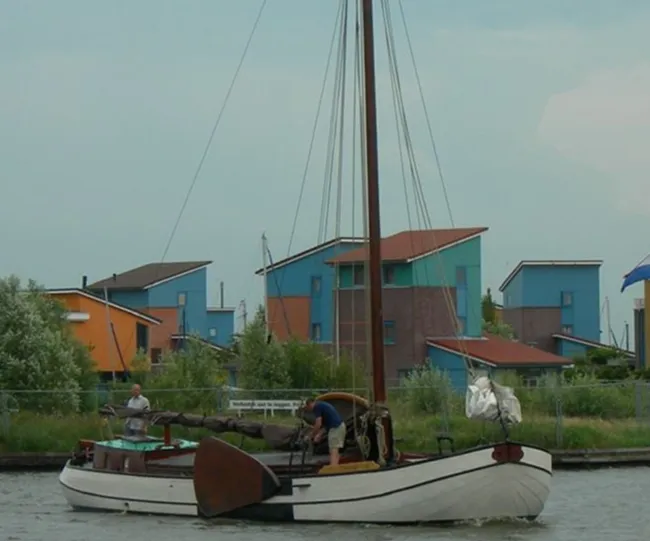
Home port AmsterdamAfter her working life she was lovingly restored, and spent a while as a motor vessel on the Blauwe Stad lake in Groningen - that's her below, before her rig came home. In mid-2022 the soul came back into the ship: her original rigging was brought back aboard. In full glory, and under sail, she set course for her current home port of Amsterdam - where she's now rather more than something to admire from the quay.